Every claim made about red light rests on one event: a particle of light of a particular energy is absorbed by a particular molecule inside a cell. Everything else is downstream of that, and most of the confusion in this category comes from people describing the downstream without understanding the event.
Photons carry a specific amount of energy
Light isn't a continuous stream. It arrives in discrete packets, and the energy in each packet is set by its wavelength — shorter wavelength, more energetic photon. This is the sense in which photobiomodulation is genuinely quantum: the interaction is one photon, one molecule, all-or-nothing. A molecule doesn't absorb some of a photon.
That's why wavelength matters far more than brightness. A molecule will accept photons at the energies it's built to accept and ignore the rest, however many of them arrive. Flooding tissue with the wrong wavelength does nothing except warm it up.
The molecule doing the absorbing
The leading candidate is cytochrome c oxidase — Complex IV, the last enzyme in the mitochondrial electron transport chain, the point where the oxygen you breathe finally accepts electrons and water is produced.
It contains copper and heme centres that absorb light in the red and near-infrared bands. That absorption profile is the reason these specific wavelengths are used and not others; it's not a marketing choice, it's the molecule's spectrum.
The most-cited proposed mechanism is nitric oxide displacement. Nitric oxide can bind to cytochrome c oxidase at the same site oxygen uses, effectively throttling the enzyme. The hypothesis is that absorbed photons dislodge it, letting the enzyme resume — a change in rate rather than a change in kind.
Worth saying plainly: this is a well-supported hypothesis, not a closed case. It's the mechanism most of the field works from, and there are competing and complementary accounts involving light-sensitive ion channels and changes in the structured water layer at membrane surfaces.
The other reason it's red
Absorption is only half of it. The light also has to arrive.
Tissue is full of things that stop light. Haemoglobin absorbs strongly through the blue and green. Water absorbs strongly in the infrared beyond about 1,000nm. Between them sits a gap — roughly 650 to 950nm — where tissue is relatively transparent and light penetrates furthest. It's called the optical window, and it's why every panel on the market clusters in the same place.
So the wavelengths aren't chosen because red is soothing. They're the overlap of two independent constraints: where the enzyme absorbs, and where light can actually reach it.
Near-infrared sits deeper into that window than visible red, which is why panels pair them — the red doing more at the surface, the near-infrared reaching further in. And it's why a panel's brightness tells you very little: the component doing the deepest work emits nothing you can see.
Electron tunnelling, briefly
The other genuinely quantum piece sits in the electron transport chain itself. Electrons move between centres in these enzymes across distances too great for classical physics to allow, by quantum tunnelling — passing through an energy barrier rather than over it. This isn't specific to light therapy; it's how cellular respiration works in every aerobic organism on earth.
It matters here only as context: the machinery red light is proposed to act on is already operating on quantum mechanics before any panel is switched on. That makes "quantum biology" a fair description of the territory. It does not, by itself, make any particular claim about a device true.
More is not better
The literature repeatedly describes a biphasic dose response. Effects increase with delivered energy up to a point, then decline past it — the same shape as a great many biological dose curves.
The practical consequence is unglamorous and worth more than any spec sheet: a more powerful panel mostly buys you shorter sessions, not better outcomes. Past the useful dose, extra exposure appears to do less rather than more.
Which is why the irradiance figures matter, and why the distance you sit at matters more than the number on the box.
Where the marketing runs ahead
The mechanism above is mainstream. Several things sold alongside it are not, and they tend to arrive wearing the same vocabulary:
Structured or "EZ" water. There is real research into ordered water layers at hydrophilic surfaces, and a real hypothesis that light affects them. There is a large gap between that and the claims made in supplement marketing.
Deuterium depletion. An active research question in metabolism. Not an established consequence of shining a lamp at yourself.
Melatonin production in mitochondria. Genuinely interesting preliminary work. Preliminary is the operative word.
None of these are nonsense, and all of them are routinely stated with a confidence the underlying papers don't carry. The tell is the same every time: a real mechanism at the bottom, an unhedged promise at the top, and no dose, no distance and no numbers in between.
What follows from all this
Three things, and they're the reason this page exists.
Wavelength is a hard constraint, not a preference. A panel emitting outside the absorption bands and the optical window isn't a weaker version of the same thing — it's a different thing.
Dose is the variable you control. Irradiance is only the rate at which you reach it, and distance changes irradiance steeply.
Mechanism is not outcome. That cytochrome c oxidase absorbs 830nm light is physics. What that means for any particular person is a separate question, with a much thinner evidence base, and anyone collapsing the two is selling something.
So which panel does that leave you?
Everything above narrows to the same practical shortlist: a panel emitting in the right bands, at an irradiance you can reach from a distance you'll actually sit at, for a dose you'll actually complete.
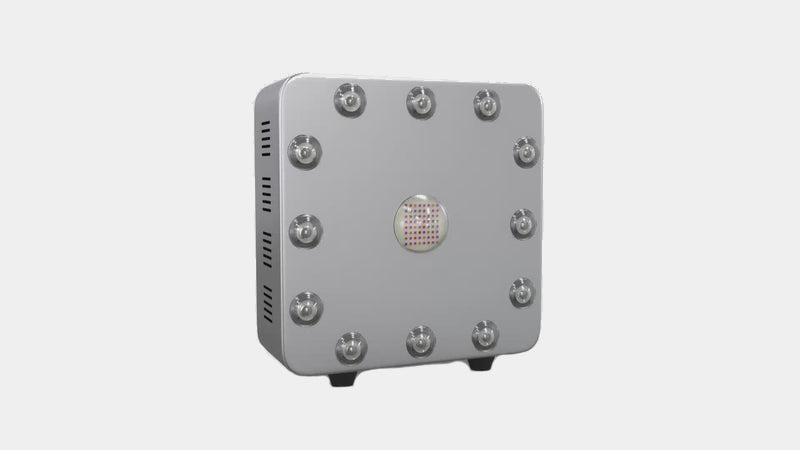 FirewaveThe compact one. Aim it at a shoulder, a knee, your face.$249.99
20% off with code
Buy at EMR-TEKCHRISTOPHE69533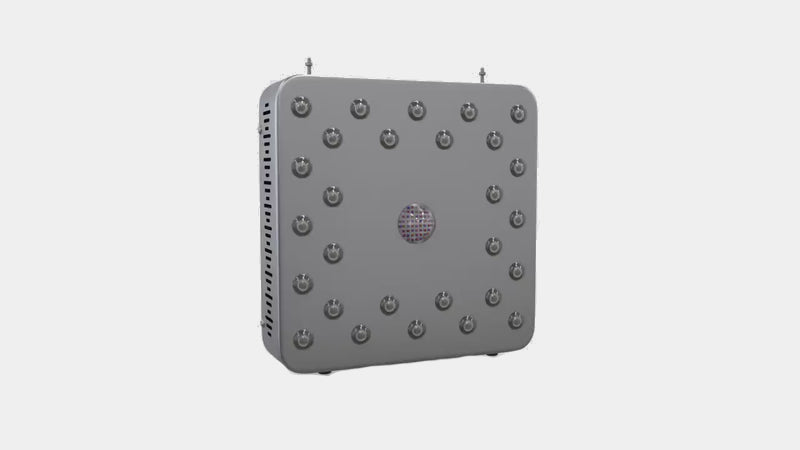 Firewave ProSame panel, quieter electronics, no flicker at all.$349.99
20% off with code
Buy at EMR-TEKCHRISTOPHE69533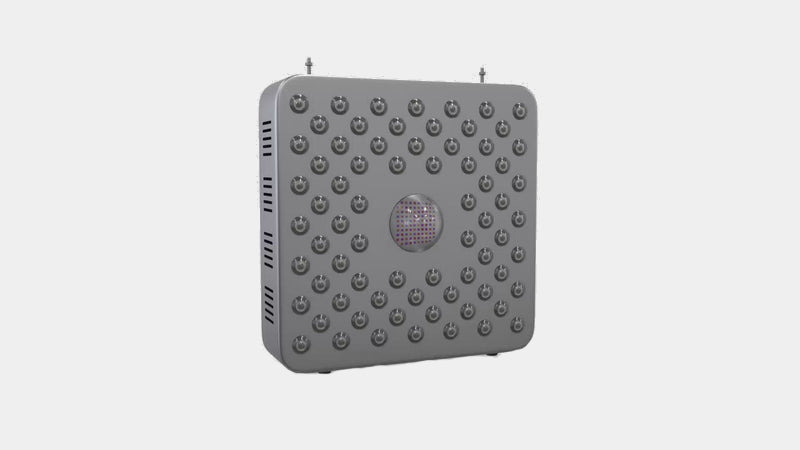 FiredragonSix wavelengths and enough reach for a whole torso.$449.99
20% off with code
Buy at EMR-TEKCHRISTOPHE69533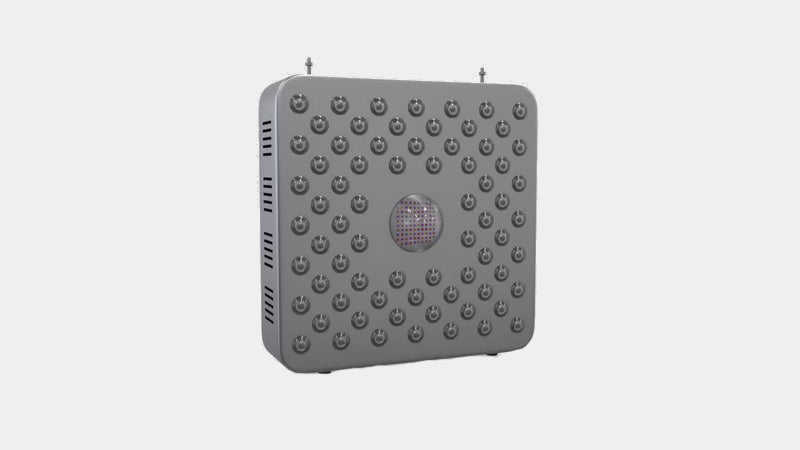 Firedragon ProThe six-wavelength panel with the better drivers.$631.99
20% off with code
Buy at EMR-TEKCHRISTOPHE69533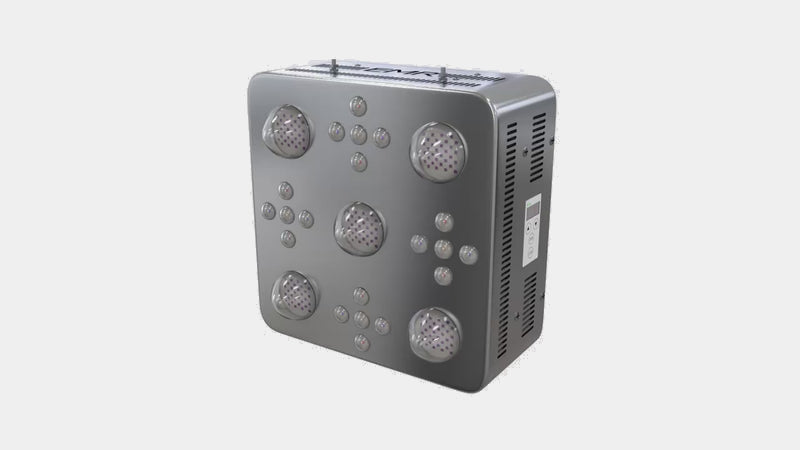 Firestorm ProHalf of you at once, from a 37-inch panel.$899.00
20% off with code
Buy at EMR-TEKCHRISTOPHE69533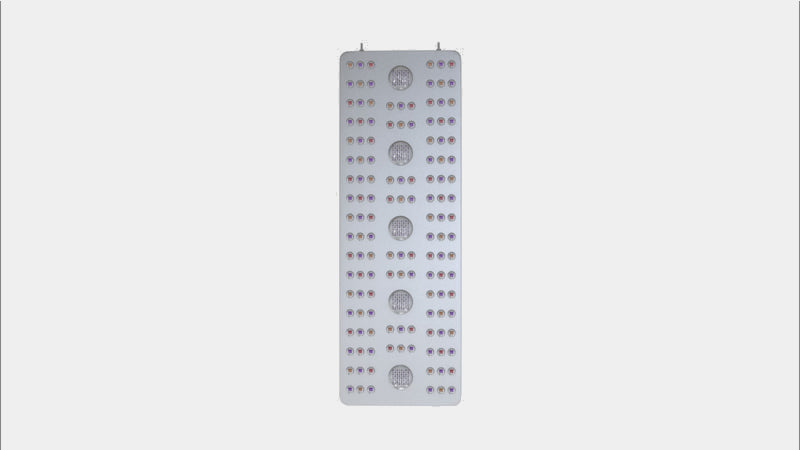 InfernoStand in front of it and cover nearly all of yourself.$899.99
20% off with code
Buy at EMR-TEKCHRISTOPHE69533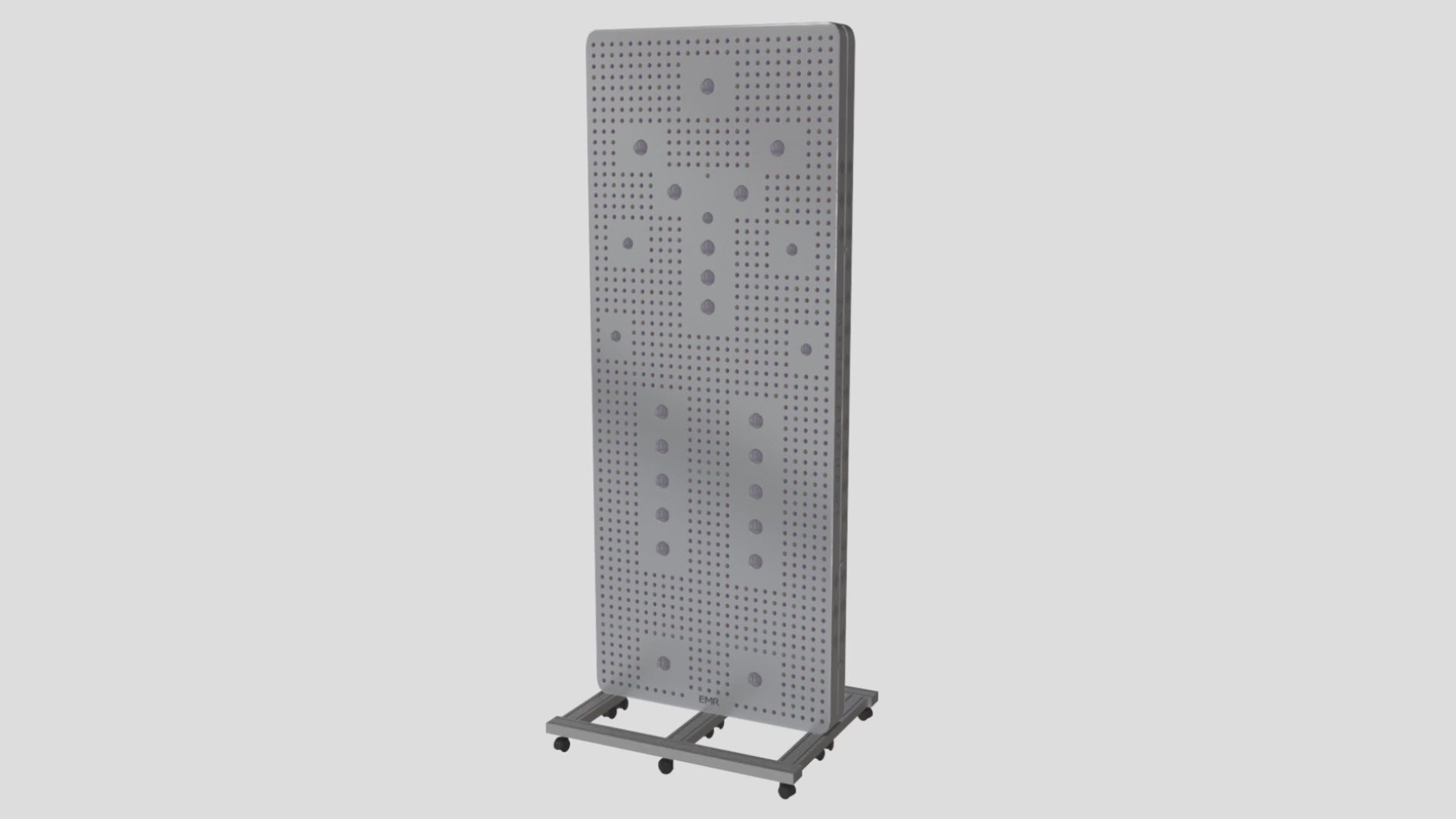 FirehawkThe one that goes in a treatment room, on wheels.$13,499.99
20% off with code
Buy at EMR-TEKCHRISTOPHE69533 ETERNOA mask that never touches your face. Red, yellow, green.$249.99
20% off with code
Buy at EMR-TEKCHRISTOPHE69533
The full breakdown — what each one covers, what it's like to live with, and which we'd buy — is on the panel guide. If you'd rather start with the numbers brands quote and how to read them, that's the irradiance claims.
Affiliate links — we earn commission if you buy through them, at no extra cost to you. How that works.